The Alarming Truth Behind the Meteren Incident: When Breaking Rules Saves Lives
The chilling footage from Meteren, Netherlands, captures a scenario that no driver ever wants to face: a truck stalled on a railway crossing, moments before a speeding train obliterates it. This horrific
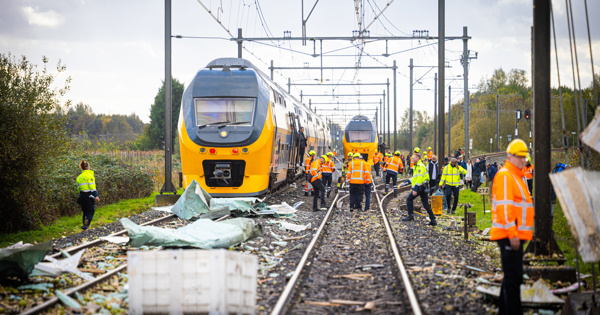
Meteren Train Collision, which occurred on a Thursday morning, saw a freight truck laden with pears struck by an oncoming train, sending debris and cargo scattering across the tracks. While thankfully resulting in only minor injuries to five individuals – passengers and the truck driver – the incident unveiled a startling piece of advice from railway authorities that every motorist should heed:
if stuck on a railway crossing, drive through the barrier.
The
Meteren Train Crash caused immense disruption, highlighting the severe consequences when vehicles and trains collide. Beyond the immediate danger, the accident led to widespread rail cancellations between Geldermalsen and Den Bosch, impacting intercity routes to Utrecht, Amsterdam, and Eindhoven, with disruptions lasting well into the weekend and possibly longer. The scene was one of total devastation: a kilometer of track destroyed, along with sleepers, rails, points, and overhead lines. One train carriage was derailed, and another train even scraped it, causing additional damage. This extensive damage underscores the sheer force involved and the critical importance of preventing such incidents.
The Root Cause: A Tight Squeeze and a Moment of Hesitation
What exactly led to the truck becoming trapped on the tracks in Meteren? According to witnesses and investigations by authorities like ProRail and the Onderzoeksraad voor Veiligheid (Dutch Safety Board), the incident was a tragic confluence of factors. The truck driver was reportedly maneuvering a tight turn near the crossing, a bend known to be challenging for large vehicles. Eyewitnesses describe the truck attempting to navigate this corner, possibly exacerbated by another truck at a nearby weigh point, requiring complex positioning.
One automobilist who witnessed the entire event described the truck "maneuvering because he wanted to make a small turn. He wouldn't have made it otherwise." The witness, who purposely kept a distance to give the truck space, observed the barriers descend. At that critical moment, the truck was still on the tracks. "When the barriers went down, he should have driven forward," the witness recounted, seeing the train approach and quickly turning away before witnessing the impact in their rearview mirror. This account strongly suggests a moment of hesitation or misjudgment by the driver, a decision that had catastrophic consequences for property and infrastructure, and nearly for lives.
The truck, loaded with crates of pears, was on its way from a fruit company to a weigh point adjacent to the tracks. This logistical detail highlights how seemingly routine tasks can become high-risk near railway infrastructure, especially where vehicle maneuverability is compromised. The incident serves as a stark reminder of the unique dangers associated with level crossings, particularly for commercial vehicles that require more space and time to navigate.
The Unconventional Wisdom: Why Breaking Barriers is the Right Call
The most compelling, and perhaps counter-intuitive, takeaway from the Meteren incident is the official advice issued by railway manager ProRail and transport organization TLN:
truck drivers stuck on a railway crossing should *always* drive through the barrier, even if it means damaging it. This isn't just a suggestion; it's a critical safety directive.
Why such a drastic measure? The answer is simple: property can be replaced, but lives cannot. A railway barrier is designed to break relatively easily upon impact, especially from a large vehicle. The cost of replacing a barrier, while not insignificant, pales in comparison to the financial and human toll of a train collision. The Meteren accident alone caused millions in damage, led to widespread travel chaos, and required a massive repair operation stretching over a kilometer of track. More importantly, it put hundreds of lives at risk.
Hesitation in such a high-stress situation is natural. Drivers might fear legal repercussions for damaging public property, or they might simply freeze. However, this advice from ProRail and TLN aims to remove that hesitation. It provides clear permission and a directive that prioritizes the safety of the driver, train passengers, and crew above all else. Driving through a barrier is a minor inconvenience compared to the devastation of a full-speed train impact.
Navigating Railway Crossings: Practical Tips for Drivers
While the Meteren incident specifically involved a truck, the lessons apply to all motorists. Railway crossings, even those with barriers, demand utmost vigilance. Here are practical tips to ensure your safety and that of others:
1.
Assess Before You Cross: Before attempting to cross, especially at complex junctions or tight turns, ensure you have enough clear space on the other side to fully clear the tracks. For large vehicles, this means considering your full length, including any trailers.
2.
Never Stop on the Tracks: Under no circumstances should you stop on a railway crossing. If traffic ahead is backed up, wait behind the white line until you can pass completely over the tracks.
3.
Be Aware of Your Vehicle's Limitations: If you're driving a long vehicle, a truck, or a car with a low undercarriage, be extra cautious at crossings that might have a steep angle or uneven surface, as you could get stuck or "high-centered."
4.
Identify Escape Routes (If Any): In rare cases, some crossings might have an emergency escape area. Be aware of your surroundings, but prioritize moving forward if trapped.
5.
If Trapped and Barriers Descend: This is the crucial moment.
*
Assess Your Position: Are your wheels still on the tracks? Can you move forward or backward a short distance to clear the danger?
*
Prioritize Movement: If moving forward means driving through a barrier, do it. Don't hesitate. Apply constant, firm pressure to the accelerator. The barrier is designed to give way.
*
Evacuate if Unable to Move: If for some reason your vehicle is completely immobilized and you cannot drive through the barrier, evacuate the vehicle immediately and move far away from the tracks in the direction the train is coming from, if possible, to avoid flying debris. Call emergency services (112 in the Netherlands) immediately.
6.
Stay Alert: Avoid distractions like mobile phones, loud music, or anything that takes your attention away from the road, especially when approaching railway crossings.
The Widespread Impact and Lessons Learned from Ongeval Meteren
The aftermath of the
Ongeval Meteren was a stark reminder of the cascading effects of such an incident. Beyond the direct damage and human impact, the disruption to rail services was extensive, affecting thousands of commuters and travelers. The repair operation was monumental, with ProRail working tirelessly to replace a kilometer of track, damaged overhead line infrastructure, and a broken point. The incident also confirmed ProRail's strategy of installing cameras at multiple railway crossings, which likely aided in understanding the sequence of events at Meteren.
The investigation by the Onderzoeksraad voor Veiligheid will undoubtedly provide deeper insights into how such accidents can be prevented in the future. This could range from improving road geometry around challenging crossings to enhancing driver education regarding emergency protocols. What is clear, however, is that the human element remains paramount. The Meteren incident underscores the critical importance of quick thinking, decisiveness, and adhering to expert safety advice, even when it involves causing what might seem like minor damage to prevent a major catastrophe.
In conclusion, the Meteren train accident serves as a powerful, albeit tragic, case study for railway safety. While authorities continue to improve infrastructure and investigate causes, the most immediate and impactful lesson for every driver is the counter-intuitive directive: if your vehicle becomes trapped on a railway crossing, do not hesitate. Drive through the barrier. It is a small price to pay to ensure that everyone, yourself included, lives to tell the tale.